


Wide Belt Sander Guide: How to Choose the Right Machine
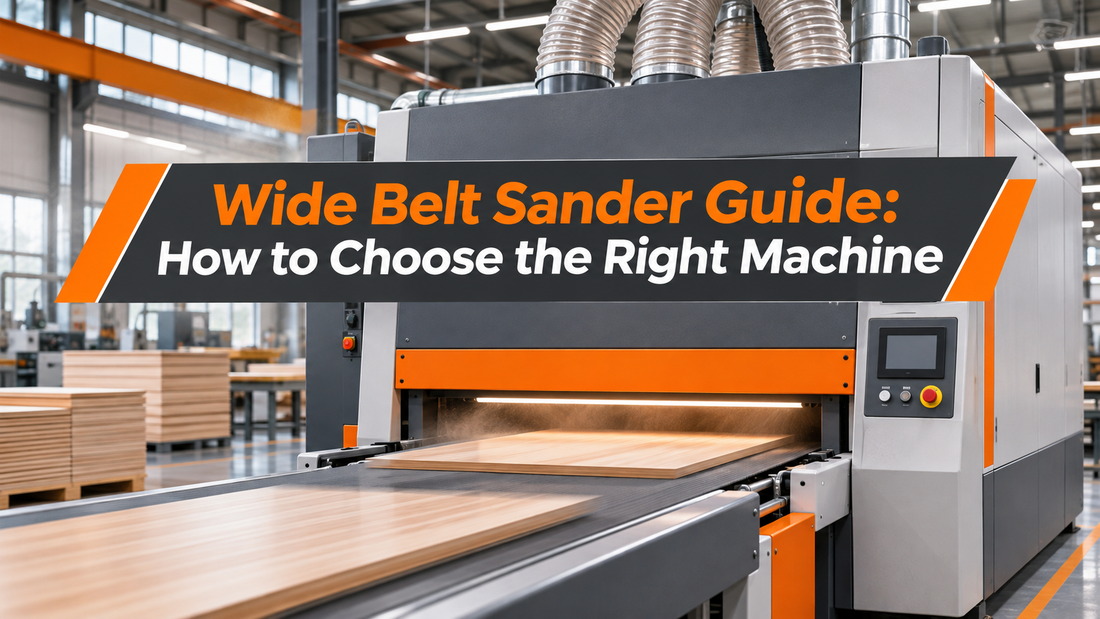
A wide belt sander can become one of the most important machines in a woodworking production shop when panels, doors, furniture components, or solid wood must be calibrated and finished consistently.
But wide belt sanders are not all designed for the same work.
A single-head machine may be ideal for calibration and general sanding. A two- or three-head configuration can combine stock removal and finishing in one pass. Veneer and high-gloss production may require segmented pads, cross sanding, or more specialized finishing technology.
Taurus Craco supplies wide belt sanders for professional woodworking, including BOSS Storm, Kalahari, Atacama, and Gobi systems for different production requirements.
This guide explains how to choose a wide belt sander based on working width, sanding heads, roller and pad configuration, abrasive grit, stock removal, finish quality, feed speed, dust collection, production volume, and the materials your shop processes.
Quick Answer: What Should You Look for in a Wide Belt Sander?
Compare the following before selecting a machine:
- Maximum working width
- Minimum and maximum working thickness
- Number of sanding heads
- Roller, pad, or roller-pad configuration
- Calibration requirements
- Finish-sanding requirements
- Veneer and sealer sanding requirements
- Abrasive belt dimensions
- Feed speed
- Motor power
- Dust extraction capacity
- Compressed air requirements
- Control and setup features
- Production volume
The best wide belt sander is the one that produces the required surface in the fewest practical passes without overcomplicating the operation.
What Does a Wide Belt Sander Do?
A wide belt sander feeds a workpiece beneath one or more abrasive sanding heads.
Depending on the machine, it can perform:
- Panel calibration
- Heavy stock removal
- Planer-mark removal
- Intermediate sanding
- Fine finish sanding
- Veneer sanding
- Sealer sanding
- High-gloss panel preparation
Unlike hand sanding, a production wide belt machine applies controlled sanding pressure across a repeatable working width and feed speed.
This makes it useful when hundreds of parts must leave the sanding department with the same thickness and surface condition.
Taurus Craco's complete guide to woodworking machinery identifies wide belt sanders as one of the core machine categories used in modern cabinet, furniture, and millwork production.
1. Start With Working Width
Working width determines the maximum workpiece that can pass through the machine.
Common industrial widths are designed around cabinet doors, panels, tabletops, furniture parts, and sheet-based components.
Before choosing a width, record:
- Largest panel width processed regularly
- Largest future product you realistically expect to manufacture
- Whether parts are sanded individually or in groups
- Available floor space
Buying too narrow can immediately limit product capability.
Buying substantially wider than required can increase machine cost, abrasive cost, power demand, and footprint without creating useful capacity.
2. Single-Head Wide Belt Sanders
A single-head wide belt sander can be a strong choice for shops that need straightforward calibration or finish sanding.
The BOSS Storm Single Head 1100 / 1300 RC Wide Belt Sander is available in 1100 and 1300 configurations and combines an industrial sanding unit with variable feed.
Single-head machines can work well for:
- General cabinet production
- Panel preparation
- Solid-wood sanding
- Shops replacing heavy hand sanding
- Production where one abrasive stage per pass is acceptable
The trade-off is that different grits or functions may require additional passes.
3. Two-Head Sanders for Calibration and Finish
A two-head machine can perform two distinct sanding steps during one pass.
For example:
First Head: Calibration / Stock Removal → Second Head: Surface Refinement
This can improve throughput compared with repeatedly changing abrasive belts on a single-head machine.
Two-head machines become attractive when the shop regularly performs a predictable sanding sequence and wants to reduce handling between stages.
4. Three-Head Sanders for Higher Production
Three-head wide belt sanders provide more opportunities to combine stock removal, intermediate sanding, and finish sanding in one production pass.
The BOSS Storm 3 Head 700 / 1300 R-R-RC Wide Belt Sander uses a roller-roller plus roller/pad configuration.
A multi-head machine can help reduce:
- Repeated material handling
- Belt-change frequency
- Work-in-process between sanding stages
- Variation between separate passes
But extra heads only provide value if the production process actually uses them.
5. Roller vs Sanding Pad
The type of contact unit affects how aggressively the abrasive interacts with the workpiece.
Sanding Roller
A roller provides concentrated contact pressure and is commonly used for:
- Calibration
- Stock removal
- Removing machining marks
- More aggressive sanding stages
Sanding Pad
A sanding pad distributes pressure differently and is commonly used where surface refinement is more important than heavy material removal.
Pad-based finishing can be useful for:
- Final surface preparation
- Veneer
- Doors and panels
- Fine furniture components
Roller-Pad Combination
Combination units provide flexibility by allowing the same head to support different sanding requirements depending on machine design and setup.
6. Calibration vs Finish Sanding
Calibration and finishing are related but different.
Calibration
Calibration removes material to create a consistent thickness.
It may be required after:
- Panel gluing
- Solid-wood assembly
- Planing
- Lamination
- Heavy machining
Finish Sanding
Finish sanding refines the surface before stain, paint, lacquer, coating, or assembly.
A shop that needs both functions should consider whether one machine can efficiently perform both or whether the production sequence requires dedicated stages.
7. Planer Sanding for Heavy Stock Removal
When the shop needs to remove substantially more material, a planer sanding machine may be a better fit than a conventional finishing sander.
The BOSS Gobi 1300 Planer Sanding Machine combines a planer unit with sanding heads for heavy-duty wood-panel processing.
This type of configuration is relevant when the objective includes:
- Heavy thickness reduction
- Panel calibration
- Removing distortion
- Following planing with controlled sanding
Do not compare a planer sander only against fine-finish machines. They solve different production problems.
8. Veneer and Sealer Sanding
Veneer introduces a different challenge because the decorative face can be extremely thin.
Too much pressure or stock removal can sand through the veneer.
High-quality veneer and coated-panel production may therefore benefit from segmented or controlled sanding pads.
The BOSS Atacama Wide Belt Sander uses electromagnetic sanding pad technology and is designed for high-class furniture, veneer, sealer sanding, and high-gloss board preparation.
For applications like these, the goal is not aggressive stock removal.
It is controlled pressure and a consistent surface.
9. Abrasive Grit Strategy
The machine does not create the finish by itself.
Abrasive selection matters just as much.
A typical progression may move from coarse to finer grits:
Calibration → Intermediate Sanding → Finish Sanding
Large jumps between grits can leave scratches that the finer belt cannot remove efficiently.
Shops should establish repeatable sanding recipes for common materials rather than changing grit sequences randomly.
10. Match the Sander to the Material
Solid Hardwood
Requires adequate motor power, controlled pressure, durable abrasives, and effective dust extraction.
Softwood
Can load abrasives with resin and may require different belt selection or cleaning practices.
MDF
Produces fine, abrasive dust and places significant demand on filtration and abrasive life.
Plywood
Requires attention to veneer thickness and surface quality.
Veneer
Requires precise control because excessive stock removal can permanently damage the face.
Painted or Sealed Panels
May require fine abrasive sequences, specialized pads, and high-quality dust removal to prepare the surface for the next coating stage.
11. Feed Speed Changes the Result
Feed speed influences how long the workpiece remains under the abrasive.
Slower feed can increase stock removal but may also increase heat and over-sanding.
Faster feed can improve throughput but may not provide enough sanding time for the required finish.
Production settings should balance:
- Material
- Grit
- Head configuration
- Required stock removal
- Surface quality
- Production rate
12. Dust Collection Is a Major Buying Factor
Wide belt sanding creates large quantities of fine particulate.
Before purchasing a sander, verify the number and diameter of dust outlets and compare those requirements with the existing dust collection system.
Poor extraction can:
- Reduce abrasive life
- Increase dust recirculation
- Contaminate machine components
- Increase cleaning requirements
- Affect finish quality
The dust system should be considered during machine selection, not after installation.
Wide Belt Sander Configuration Comparison
| Configuration | Best Fit | Main Advantage |
|---|---|---|
| Single Head | Growing shops and general sanding | Lower complexity and versatile use |
| Two Head | Calibration plus finish sanding | Two sanding stages in one pass |
| Three Head | Higher-volume production | Multiple sanding stages with less handling |
| Planer Sander | Heavy stock removal | Planing and sanding in one production system |
| Segmented / Specialty Pad | Veneer, sealer, premium surfaces | Controlled pressure and fine finishing |
How Much Production Capacity Do You Need?
Do not size a sander only around the number of parts produced today.
Consider:
- Parts per shift
- Average workpiece width
- Number of required sanding passes
- Changeover frequency
- Future product sizes
- Upstream CNC and saw capacity
- Downstream finishing capacity
The Woodworking Machinery Guide explains how a sanding department can become the next bottleneck after faster CNC or panel-processing equipment is added upstream.
Operator Setup and Controls
A production machine should be evaluated by how quickly and consistently operators can set it up.
Useful features may include:
- Digital thickness setting
- Variable feed speed
- Automatic belt tracking
- Electronic pressure control
- Fault diagnostics
- Recipe storage
- Quick abrasive access
Faster setup creates the greatest value in shops that change materials, thicknesses, or finish requirements frequently.
Wide Belt Sander Buying Checklist
Before requesting a quote, document:
- Maximum workpiece width
- Minimum and maximum thickness
- Materials being sanded
- Required stock removal
- Required final grit
- Whether calibration is needed
- Whether veneer is processed
- Whether sealer or coated surfaces are sanded
- Number of passes used today
- Parts per shift
- Available electrical power
- Compressed air requirements
- Dust collection capacity
- Available floor space
- Operator skill and training requirements
Common Wide Belt Sander Buying Mistakes
- Choosing only by working width
- Buying too few heads for a repeat multi-stage process
- Buying extra heads that production never uses
- Using a finish sander for heavy calibration
- Ignoring veneer thickness
- Underestimating dust extraction
- Ignoring abrasive belt cost and availability
- Failing to account for compressed air
- Running worn abrasives instead of correcting the process
- Buying more machine speed than downstream finishing can absorb
Maintenance Protects Finish Quality
Wide belt sanders operate with moving belts, rollers, bearings, pressure systems, tracking controls, conveyors, and extraction.
Routine maintenance can include:
- Cleaning dust from internal components
- Inspecting sanding belts
- Checking belt tracking
- Inspecting conveyor surfaces
- Checking pressure rollers
- Inspecting bearings
- Maintaining compressed-air systems
- Cleaning extraction points
Review the Woodworking Machinery Maintenance Checklist when building a preventative-maintenance program for sanding and other production equipment.
Final Thoughts
Choosing the right wide belt sander begins with the surface your shop needs to produce.
Define the working width.
Determine how much material must be removed.
Identify the final finish.
Then choose the number of heads, roller and pad configuration, abrasive sequence, feed speed, dust extraction, and control features that support that workflow.
A single-head machine may solve a growing shop's sanding bottleneck.
A multi-head machine may allow a production facility to complete several sanding stages in one pass.
A specialized segmented-pad machine may be the right choice for veneer, sealer, or premium high-gloss surfaces.
Taurus Craco Machinery supplies industrial wide belt sanders for cabinet, furniture, millwork, door, panel, and solid-wood production.
Frequently Asked Questions
What is a wide belt sander used for?
A wide belt sander is used to calibrate thickness, remove stock, eliminate machining marks, refine surfaces, and prepare panels or solid wood for finishing. The exact function depends on sanding-head configuration and abrasive grit.
How many sanding heads do I need?
A single head can be sufficient for general sanding. Two or three heads become valuable when the shop repeatedly uses multiple grits or needs calibration and finish sanding in one pass. The best number depends on the production sequence.
What is the difference between a sanding roller and sanding pad?
A roller applies more concentrated pressure and is commonly used for calibration and stock removal. A sanding pad distributes pressure differently and is often used for finer surface finishing. Some machines combine both functions.
Can a wide belt sander sand veneer?
Yes, but veneer requires precise control because the decorative layer can be thin. Machines designed for veneer and sealer sanding may use segmented pressure pads or advanced control systems to avoid sanding through the face.
How do I choose the correct working width?
Choose a machine that accommodates the widest parts you regularly process plus realistic future requirements. Avoid buying substantially more width than the shop will use because wider machines can increase footprint, abrasive cost, and power demand.