


Choosing the Right CNC Machinery for Metal Fabrication
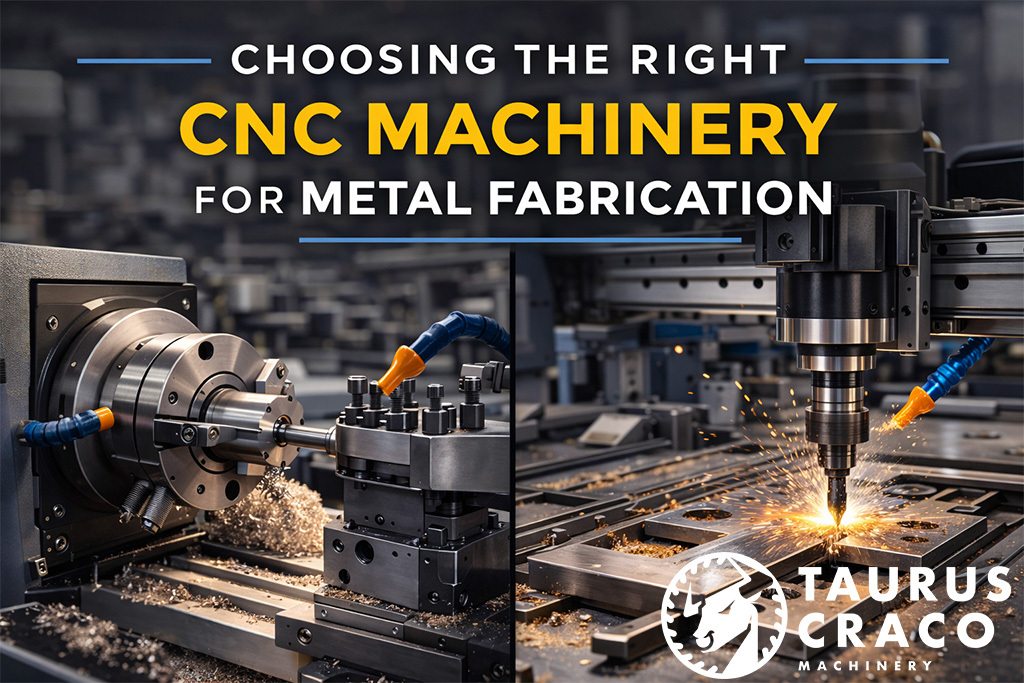
With so many options available, from CNC mills and lathes to multi-axis machining centers and plasma systems, it is essential to evaluate your needs carefully before making a purchase.
Start with Your Production Goals
The first step in choosing CNC machinery is understanding what you plan to produce. Are you focused on high-volume production runs, custom one-off parts, structural fabrication, or complex precision components?
For example:
- CNC milling machines are ideal for producing intricate shapes and tight-tolerance parts.
- CNC lathes are best suited for cylindrical components such as shafts and fittings.
- CNC plasma or laser systems are commonly used for sheet metal cutting and structural fabrication.
- Multi-axis CNC machines are perfect for complex aerospace or automotive components.
Consider Material and Thickness
Metal fabrication covers a wide range of materials, including aluminum, steel, stainless steel, brass, titanium, and specialty alloys. Each material requires specific cutting speeds, spindle power, and tooling configurations.
Heavier materials or thicker plate require more robust CNC machinery with higher torque and stability. Lighter fabrication work may allow for more compact machines. Choosing equipment that aligns with the types of metal you process daily will improve efficiency and reduce wear on your machines.
Evaluate Precision and Tolerance Requirements
Not all metal fabrication projects require the same level of accuracy. If you are producing aerospace components or medical parts, extremely tight tolerances are critical. In these cases, advanced CNC machines with multi-axis capabilities and high-resolution controls are necessary.
For structural components or general fabrication, slightly broader tolerances may be acceptable. Understanding your industry standards will guide your decision when comparing CNC machinery specifications.
Look at Automation and Integration
Modern CNC machinery and CNC tooling often includes automation features that can significantly boost productivity. Automatic tool changers, pallet changers, robotic loading systems, and real-time monitoring software reduce manual labor and shorten cycle times.
If your shop plans to scale operations, choosing CNC machines that integrate with CAD and CAM software systems is essential. Digital workflows allow you to move seamlessly from design to production while minimizing errors.
Automation also improves consistency. Once a program is validated, CNC machines can replicate the same part thousands of times with minimal variation.
Assess Floor Space and Layout
Space is often overlooked when selecting CNC machinery. Large machining centers require adequate clearance for maintenance, loading, and safe operation. You should also account for material handling equipment, coolant systems, and chip management.
Before purchasing CNC machines, evaluate your facility layout. Make sure the equipment will fit comfortably and allow for future expansion if needed.
Service, Support, and Maintenance
CNC machinery is a long-term investment. Beyond the machine itself, consider the level of support provided by the supplier. Reliable service, available replacement parts, and preventative maintenance programs are critical to minimizing downtime.
Even the most advanced CNC machines require regular maintenance to operate at peak performance. Working with a trusted partner ensures that your metal fabrication operation remains efficient and productive over time.
Budget and Long-Term ROI
While cost is always a factor, the lowest price should not be the only consideration. High-quality CNC machinery often delivers better performance, durability, and energy efficiency. Over time, this results in reduced downtime, lower maintenance costs, and fewer rejected parts.
Think of CNC machines as strategic assets. The right equipment should increase production capacity, improve quality, and support long-term growth.
Future-Proofing Your Operation
Technology continues to evolve rapidly in metal fabrication. Choosing CNC machinery with upgrade capabilities, flexible software, and expandable automation ensures your investment remains relevant as industry demands change.
Businesses that invest in modern CNC machines position themselves for innovation, scalability, and sustained competitiveness.
Final Thoughts
Choosing the right metal fabrication CNC machinery requires careful planning and a clear understanding of your production needs. From precision requirements and material types to automation capabilities and support services, every factor plays a role in making the right decision.
When selected strategically, CNC machines become the backbone of an efficient, profitable, and future-ready metal fabrication operation.