


Choosing CNC Machines for Woodworking Manufacturing
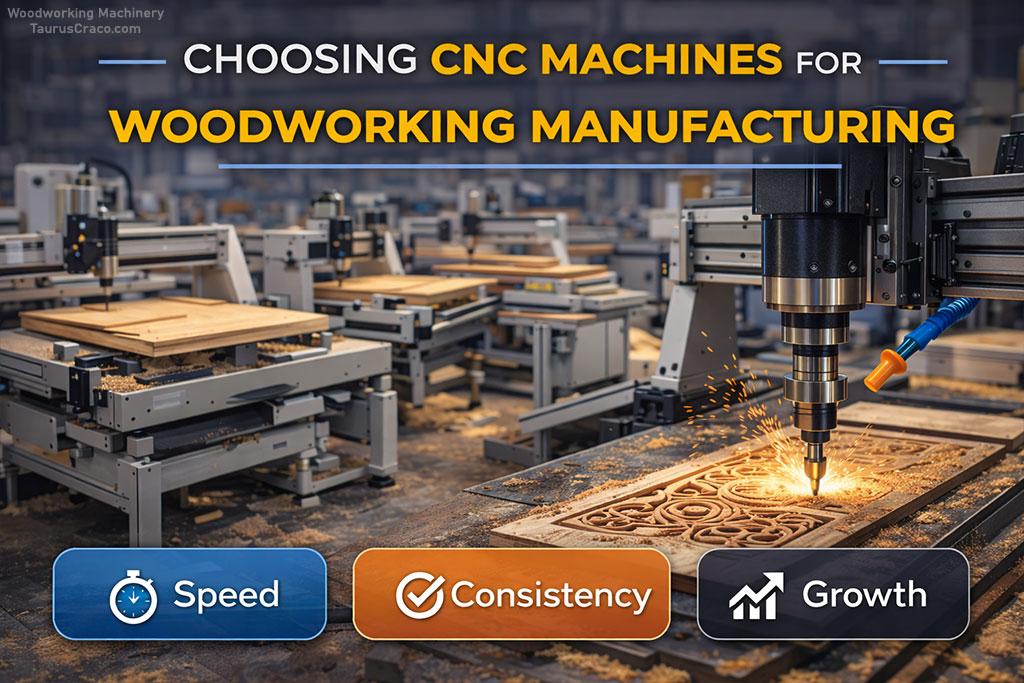
Selecting the right CNC machines for woodworking manufacturing is one of the most important decisions a shop can make. The right investment can improve production speed, consistency, material yield, and long-term profitability. The wrong choice can create bottlenecks, increase waste, and limit your ability to grow. As more manufacturers adopt automation, choosing the right CNC machinery has become essential for staying competitive in modern wood working.
Whether you produce cabinets, furniture, millwork, doors, display fixtures, or custom panels, the right CNC woodworking machine can help your operation run more efficiently and more predictably.
Why CNC Machines Matter in Woodworking Manufacturing
Woodworking manufacturing often involves repetitive cutting, drilling, shaping, and routing. Manual methods can still work for some applications, but they usually require more labor, more setup time, and more room for human error. This is where CNC woodworking machines deliver a major advantage.
With properly programmed CNC woodworking machinery, manufacturers can repeat the same process over and over with a high level of precision. This improves part consistency, reduces mistakes, and helps shops complete more work in less time. For production-focused operations, this level of repeatability is essential.
Start with Your Production Needs
Before buying any CNC machines, it is important to look closely at what your shop actually produces. A shop focused on flat panel cabinetry will have very different needs than one producing custom millwork or detailed carved components.
If your production is centered around sheet goods such as plywood, MDF, or melamine, a nesting-based CNC woodworking machine may be the best fit. If you handle more complex custom components or multi-sided machining, a pod and rail system or machining center may make more sense.
The best decision starts with understanding your workflow, product types, and production volume.
Consider the Main Types of CNC Machinery
There are several common types of CNC woodworking machines used in woodworking manufacturing, and each serves a different purpose.
CNC Routers
CNC routers are among the most widely used options in CNC woodworking. They are ideal for cutting, carving, drilling, and shaping a wide range of materials. They are often used for cabinetry, furniture parts, signage, and decorative panels.
CNC Nesting Machines
These machines are built to maximize sheet usage and reduce waste. In high-volume panel processing, they are often considered some of the best CNC woodworking machines because they improve efficiency while reducing material loss.
CNC Machining Centers
Machining centers combine multiple operations into one automated system. These machines are often used in more advanced manufacturing environments where speed, flexibility, and multi-function capability are important.
CNC Pod and Rail Machines
These machines are ideal for shops producing shaped parts, custom components, and work that requires edge access or multi-sided machining. They offer flexibility for more specialized manufacturing needs.
Evaluate Speed, Precision, and Repeatability
In manufacturing, speed matters, but not at the expense of accuracy. The best CNC machinery balances both. Faster spindle speeds, efficient tool paths, and automatic tool changers can improve throughput, while solid machine construction helps maintain precision.
Repeatability is another key factor. A high-quality CNC woodworking machine should be able to produce the same part consistently across hundreds or thousands of pieces. This is especially important in cabinetry, furniture assembly, and any environment where precise fit matters.
Think About Software and Ease of Use
The performance of CNC woodworking machinery depends not only on the machine itself, but also on the software behind it. User-friendly controls, strong CAD and CAM integration, and intuitive programming tools can save time and reduce mistakes.
If your operators are new to CNC woodworking, ease of use becomes even more important. A machine that is difficult to program or troubleshoot can reduce productivity, even if it looks good on paper. Training and support should be part of the buying decision.
Plan for Shop Space and Workflow
Not every shop has unlimited floor space. Before investing in CNC machines woodworking manufacturers use, you need to consider footprint, material loading areas, dust collection, and operator access.
A machine should fit naturally into your production flow. If it creates congestion or slows material movement, it may reduce the very efficiency you are trying to gain. Thinking through layout early can help avoid costly adjustments later.
Look Beyond the Machine Itself
Choosing a CNC woodworking machine is not just about the initial purchase. Long-term value also depends on maintenance, parts availability, technical support, and service response times.
Even the best CNC woodworking machines need maintenance and occasional replacement parts. Working with a supplier that offers strong support can make a major difference in uptime and long-term reliability. This is especially important in woodworking manufacturing, where delays can affect multiple projects and deadlines.
Make the Decision with Growth in Mind
A machine that meets your needs today should also support your goals for tomorrow. If you expect higher production volume, more custom work, or a broader product mix in the future, choose CNC machinery that gives you room to grow.
The most successful investments are not just based on today’s workload. They are based on where the business is going next.
Final Thoughts
Choosing the right CNC machines for woodworking manufacturing is about more than specs and price. It is about finding the right fit for your workflow, products, team, and growth plans. The right CNC woodworking machine can improve efficiency, reduce waste, increase accuracy, and support long-term success.
As modern wood working continues to evolve, businesses that invest in reliable, high-performance CNC woodworking machines will be better positioned to compete, scale, and deliver consistent quality.
Frequently Asked Questions About CNC Machines
1. What are the best CNC machines for woodworking manufacturing?
The best CNC machines for woodworking manufacturing depend on what your shop produces. CNC routers, nesting machines, machining centers, and pod and rail systems are all popular choices in CNC woodworking because they serve different production needs.
2. How do CNC machines improve woodworking manufacturing?
CNC machines improve woodworking manufacturing by increasing speed, repeatability, and precision. With the right CNC woodworking machinery, shops can automate cutting, drilling, and shaping while reducing manual labor and material waste.
3. Are CNC woodworking machines good for custom work?
Yes, CNC woodworking machines are excellent for custom work as well as production work. A flexible CNC woodworking machine can switch between jobs quickly, making it useful for shops that handle a mix of custom and repeat orders.
4. What should I consider before buying CNC machinery?
Before buying CNC machinery, consider your production volume, materials, available floor space, software needs, operator experience, and long-term growth plans. Choosing the right CNC machines woodworking shops rely on starts with understanding your workflow.
5. Why is support important when buying CNC woodworking machines?
Support is important because even the best CNC woodworking machines require training, maintenance, and occasional service. A reliable supplier helps keep your CNC machinery running efficiently and reduces downtime when issues come up.