


5 Key Benefits of Modern CNC Machines in Metal Working
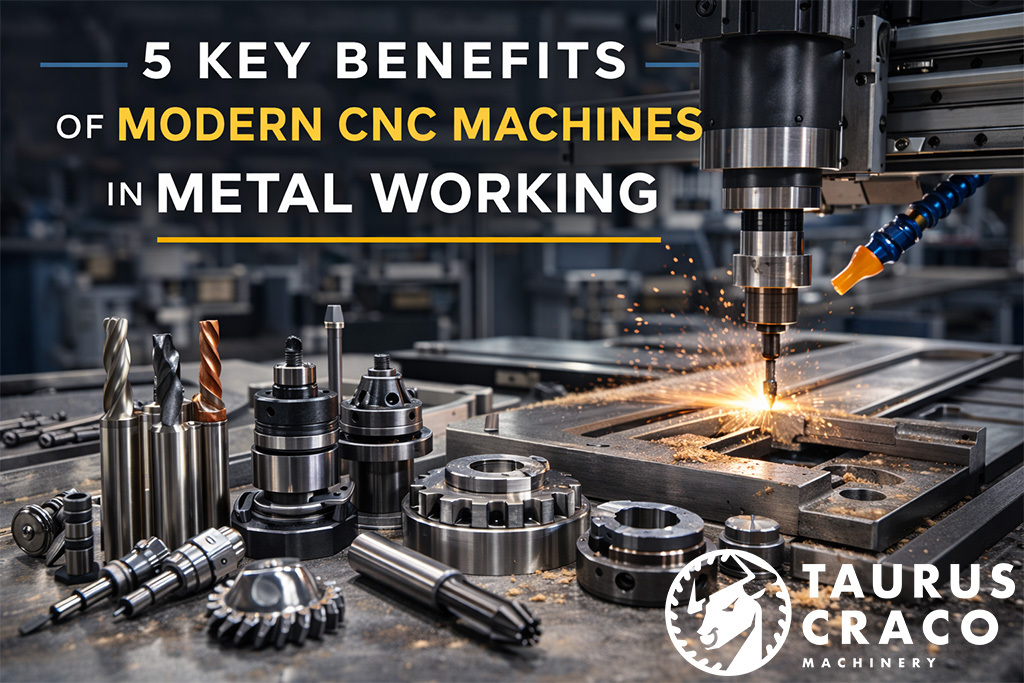
Metal working machinery has evolved dramatically over the past few decades. What was once a highly manual, labor-intensive process has transformed into a precision-driven, technology-powered industry. At the center of this transformation are modern CNC machines. Today’s CNC machinery is redefining what’s possible in metal working by delivering unmatched accuracy, efficiency, and scalability.
Whether you operate a fabrication shop, aerospace facility, automotive plant, or industrial manufacturing business, investing in advanced CNC machines can significantly improve performance and profitability. Here are five key benefits of modern CNC machines in metal working.
1. Exceptional Precision and Accuracy
One of the most important advantages of CNC machines in metal working is precision. Modern CNC machinery operates using programmed instructions that control cutting tools with microscopic accuracy. This allows manufacturers to produce complex metal components with extremely tight tolerances.
In industries such as aerospace, medical device manufacturing, and automotive production, even the smallest deviation can lead to failure. CNC machines eliminate much of the human error associated with manual machining. Once a program is set and verified, the machine can replicate the same part repeatedly with consistent precision.
This level of repeatability is critical in metal working environments where quality control standards are strict and parts must meet exact specifications.
2. Increased Production Efficiency
Efficiency is another major benefit of modern CNC machinery for sale. Traditional metal working methods often require multiple setups, manual adjustments, and constant supervision. CNC machines streamline this process.
With automated tool changers, multi-axis capabilities, and advanced software integration, a single CNC machine can perform multiple operations in one setup. Milling, drilling, tapping, and contouring can often be completed without removing the workpiece.
This reduces cycle times, minimizes downtime, and increases overall throughput. Shops can produce more parts in less time while maintaining consistent quality. For businesses looking to scale operations, CNC machines provide the production power needed to meet growing demand.
3. Ability to Handle Complex Designs
Modern product design continues to become more intricate. Complex geometries, detailed contours, and custom shapes are increasingly common in metal working applications. CNC machines excel in this environment.
Advanced 4-axis and 5-axis CNC machinery allows manufacturers to machine parts from multiple angles without repositioning the material manually. This capability enables the production of highly complex components that would be extremely difficult or even impossible to achieve using traditional methods.
CNC machines also integrate seamlessly with CAD and CAM software. Designers can create digital models, simulate machining processes, and then send precise instructions directly to the machine. This digital workflow reduces errors and accelerates production timelines.
For companies competing in high-tech industries, the ability to manufacture complex metal components efficiently is a major competitive advantage.
4. Improved Workplace Safety
Metal working environments can be hazardous, especially when operating manual machinery. CNC machines improve workplace safety by reducing direct operator interaction with cutting tools and moving components.
Once a job is programmed and material is secured, the CNC machine performs most operations within an enclosed workspace. Operators monitor the process rather than manually guiding tools. This reduces the risk of injuries caused by sharp tools, flying debris, or improper handling.
Modern CNC machinery also includes advanced safety features such as emergency stops, protective guarding, automated shutdown systems, and real-time monitoring alerts. By limiting manual intervention and enhancing safety protocols, businesses can create a safer work environment while maintaining productivity.
5. Long-Term Cost Savings
Although CNC machines represent a significant upfront investment, they often deliver substantial long-term cost savings in metal working operations.
First, automation reduces labor costs. One skilled operator can oversee multiple CNC machines simultaneously, increasing efficiency without expanding payroll proportionally.
Second, precision machining reduces material waste. Accurate cuts and optimized tool paths mean fewer rejected parts and less scrap metal. Over time, this material efficiency adds up to significant savings.
Third, modern CNC machinery is built for durability. With proper preventative maintenance, CNC machines can operate reliably for many years. Reduced downtime, fewer errors, and consistent production quality contribute to stronger profit margins.
Additionally, CNC machines allow businesses to bring more processes in-house. Instead of outsourcing specialized metal working tasks, companies can expand capabilities internally, improving turnaround times and retaining revenue.
The Competitive Edge in Metal Working
The metal working industry is becoming more competitive every year. Customers demand faster delivery, tighter tolerances, and higher quality standards. Companies that rely solely on outdated equipment risk falling behind. Modern CNC machines for sale provide the flexibility and scalability required to compete in today’s market. Whether producing custom prototypes or high-volume production runs, CNC machinery allows metal working businesses to adapt quickly to changing demands.
By combining precision, automation, safety, and efficiency, CNC machines help manufacturers increase productivity while maintaining superior quality.
Final Thoughts
CNC machines have fundamentally changed the landscape of metal working. From improved precision and efficiency to enhanced safety and long-term cost savings, modern CNC machinery delivers measurable advantages across industries.
For metal working businesses looking to improve operations, expand capabilities, and stay competitive, investing in advanced CNC machines is not just an upgrade. It is a strategic move toward sustainable growth and operational excellence.