


How to Finance Woodworking Machinery for Your Shop
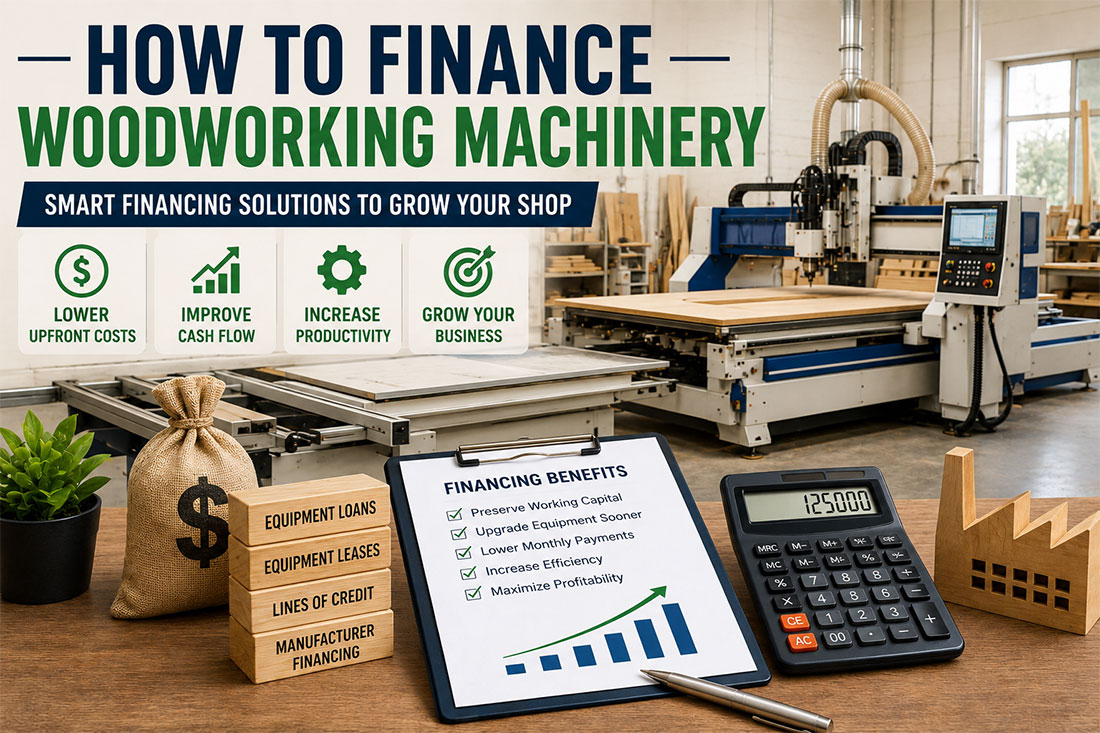
Woodworking machinery is one of the largest investments most woodworking businesses will ever make. Whether you're purchasing a CNC router, edgebander, panel saw, dust collection system, or a complete production line, the way you finance woodworking machinery can have a major impact on cash flow, profitability, and long-term growth.
Many shop owners focus heavily on the machine itself.
The smarter question is often:
How should you pay for it?
A poorly structured purchase can create financial pressure.
A well-structured machinery financing strategy can allow your shop to increase production, generate revenue, and preserve working capital at the same time.
The goal is not simply to buy woodworking machinery.
The goal is to buy woodworking machinery in a way that supports growth.
Quick Answer
Most woodworking businesses finance woodworking machinery through:
✓ Equipment loans
✓ Equipment leasing
✓ Operating lines of credit
✓ Manufacturer financing programs
✓ Government-backed business financing
✓ Traditional commercial lending
For many growing shops, equipment financing or leasing provides the best balance between cash preservation and business growth.
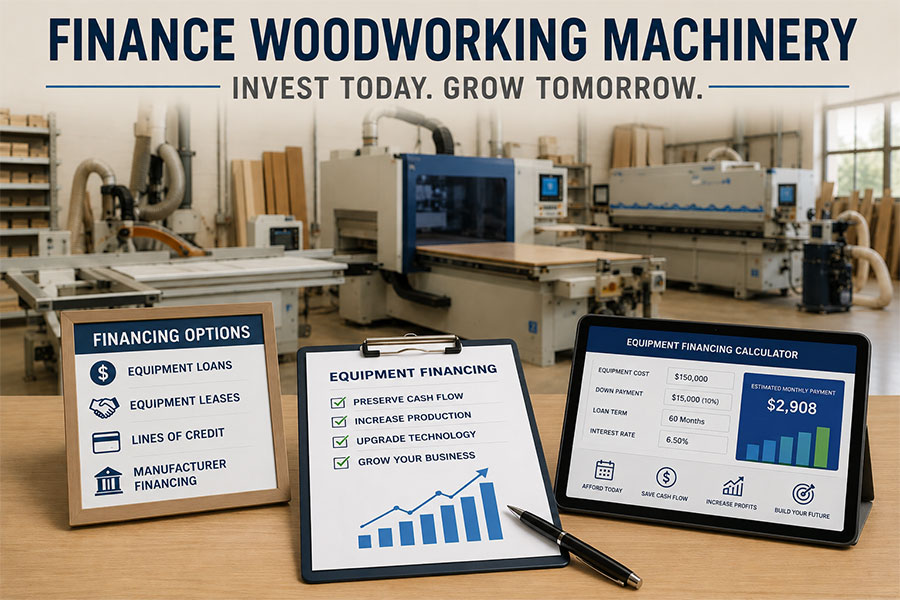
Common Ways To Finance Woodworking Machinery
| Financing Option | BestFor | Upfront Cost |
Equipment Loan |
Long-term ownership |
Moderate |
Equipment Lease |
Cash flow preservation |
Lower |
Line of Credit |
Flexible purchases |
Varies |
Manufacturer Financing |
New equipment purchases |
Moderate |
Commercial Loan |
Large investments |
Higher |
Cash Purchase |
Debt-free ownership |
Highest |
The right option depends on your business goals, available capital, and production plans.
Why Financing Woodworking Machinery Makes Sense
Many business owners assume paying cash is always the best option.
Sometimes it is.
Sometimes it isn't.
If a CNC router costs $150,000 and allows your shop to increase annual production by $300,000, tying up cash may not be the most efficient strategy.
Financing can allow you to:
✓ Preserve working capital
✓ Invest in additional growth
✓ Upgrade equipment sooner
✓ Improve cash flow
✓ Increase production capacity
✓ Take on larger projects
A machine that generates revenue often pays for itself over time.
The challenge is matching the financing structure to the expected return.
Equipment Loans For Woodworking Machinery
Equipment loans are one of the most common financing options for woodworking machinery.
The machine serves as collateral.
The lender provides financing.
The business makes monthly payments.
At the end of the term, the business owns the equipment.
Advantages Of Equipment Loans
✓ Ownership at the end of the term
✓ Predictable monthly payments
✓ Competitive interest rates
✓ Suitable for new woodworking machinery
✓ Suitable for used woodworking machinery
Potential Drawbacks
X Larger down payment requirements
X May impact borrowing capacity
X Approval requirements can be stricter
Equipment loans are often ideal for shops planning to keep machinery for many years.
Equipment Leasing For Woodworking Machinery
Leasing has become increasingly popular among cabinet shops, millwork companies, and manufacturing businesses.
Rather than purchasing machinery outright, the business pays to use the equipment.
Benefits Of Leasing
✓ Lower upfront investment
✓ Preserves working capital
✓ Easier equipment upgrades
✓ Predictable monthly costs
✓ Faster approval process
For rapidly growing shops, leasing can make it easier to stay current with technology.
Potential Drawbacks
X Total cost may be higher over time
X Limited ownership benefits
X Contract restrictions may apply
Many businesses lease CNC machinery because technology continues to evolve.
Equipment Loan vs Equipment Lease
| Feature | Equipment Loan | Equipment Lease |
Ownership |
Yes |
Usually No |
Upfront Cost |
Higher |
Lower |
Monthly Payment |
Moderate |
Often Lower |
Long-Term Cost |
Often Lower |
Often Higher |
Equipment Upgrades |
Less Flexible |
More Flexible |
Best For |
Long-term ownership |
Growth-focused shops |
There is no universal winner.
The right choice depends on your goals.
Financing CNC Machinery
CNC machinery is often one of the largest woodworking machinery investments.
The cost of CNC machinery can range from tens of thousands of dollars to several hundred thousand dollars depending on size and capabilities.
Common CNC investments include:
- CNC routers
- CNC machining centers
- CNC nesting machines
- CNC beam saws
- Automated production systems
Why CNC Machinery Is Frequently Financed
CNC machinery often creates measurable improvements:
✓ Higher production output
✓ Reduced labor costs
✓ Better material utilization
✓ Improved accuracy
✓ Faster production times
Because CNC machinery can directly generate revenue, financing is often easier to justify.
Financing New vs Used Woodworking Machinery
Both new woodworking machinery and used woodworking machinery can be financed.
However, lenders often evaluate them differently.
| Category | New Woodworking Machinery | Used Woodworking Machinery |
Financing Availability |
Excellent |
Good |
Interest Rates |
Often Lower |
Sometimes Higher |
Equipment Life |
Longer |
Varies |
Warranty Coverage |
Usually Included |
Limited |
Approval Simplicity |
Often Easier |
Depends On Age |
Used woodworking machinery can still be an excellent investment if purchased from a reputable supplier.
How Much Woodworking Machinery Can A Shop Afford?
One of the biggest mistakes business owners make is purchasing machinery based on approval amounts.
Approval does not equal affordability.
Instead, evaluate:
- Current revenue
- Production capacity
- Labor savings
- New business opportunities
- Cash flow requirements
A machine should strengthen the business.
Not strain it.
Estimated Monthly Financing Examples
| Equipment Value | Estimated Monthly Payment* |
$25,000 |
$500-$700 |
$50,000 |
$900-$1,300 |
$100,000 |
$1,800-$2,600 |
$250,000 |
$4,500-$6,500 |
$500,000 |
$9,000-$13,000 |
*Actual payments vary based on rates, term lengths, and lender requirements.
Common Financing Mistakes
Many woodworking businesses make avoidable financing mistakes.
What Not To Do
X Financing machinery without calculating ROI
X Buying equipment before confirming production demand
X Ignoring maintenance costs
X Failing to budget for tooling
X Taking on excessive monthly payments
X Choosing financing based solely on monthly cost
X Overlooking installation expenses
The lowest monthly payment to buy woodworking machinery is not always the best financial decision.
What Machinery Should Be Financed First?
Not every machine deserves priority.
The best financing candidates are usually machines that solve production bottlenecks.
| Priority | Machinery Type |
1 |
CNC Router |
2 |
Edgebander |
3 |
Panel Saw |
4 |
Dust Collection System |
5 |
Wide Belt Sander |
6 |
Drilling Equipment |
The machine generating the strongest return often deserves the highest priority.
Industries That Frequently Finance Woodworking Machinery
Many sectors regularly finance woodworking machinery equipment.
| Industry | Common Machinery |
Cabinet Manufacturing |
CNC, Edgebanders, Panel Saws |
Architectural Millwork |
CNC Machinery, Sanding Equipment |
Furniture Manufacturing |
CNC Routers, Drilling Systems |
Retail Fixture Manufacturing |
CNC Routers, Beam Saws |
Closet Manufacturing |
CNC Machinery, Boring Equipment |
Commercial Millwork |
CNC Production Systems |
The financing approach may differ, but the objective remains the same.
Increase production while protecting cash flow.
Buying Considerations Before Financing Woodworking Machinery
Before signing any financing agreement, ask:
| Question | Why It Matters |
What bottleneck does this machine solve? |
Justifies investment |
How quickly will it generate revenue? |
Supports ROI |
Can existing staff operate it? |
Reduces implementation risk |
What tooling is required? |
Impacts total cost |
What maintenance costs exist? |
Affects profitability |
Can the machine scale with growth? |
Improves long-term value |
Is service support available? |
Reduces downtime |
The best machinery purchase is usually one that supports future growth, not just current production.
Benefits Of Financing Woodworking Machinery
✓ Preserve cash reserves
✓ Increase production capacity
✓ Upgrade technology sooner
✓ Improve operational efficiency
✓ Reduce labor dependency
✓ Expand business opportunities
✓ Take on larger projects
✓ Support long-term growth
Financing allows many businesses to acquire equipment years earlier than they otherwise could.
Final Thoughts
Financing woodworking machinery can be one of the smartest ways to grow a woodworking business.
Whether you're investing in CNC machinery, edgebanders, panel saws, sanding equipment, or complete production systems, the right financing structure can help increase capacity without draining working capital.
The best approach is not simply finding financing.
The best approach is matching financing to business goals, production requirements, and expected return on investment.
Many woodworking businesses work with suppliers such as Taurus Craco Machinery to evaluate new woodworking machinery, used woodworking machinery, production equipment, and growth-focused machinery investments that align with long-term business objectives.
FAQ
Is it better to finance woodworking machinery or pay cash?
It depends on your cash position and growth plans. Financing can preserve working capital while allowing your business to increase production capacity.
Can used woodworking machinery be financed?
Yes. Many lenders offer financing for used woodworking machinery, although rates and terms may vary depending on equipment age and condition.
What is the easiest woodworking machinery to finance?
New woodworking machinery often receives the most favorable financing terms because lenders view it as lower risk.
Should I lease or finance CNC machinery?
Leasing may be attractive for businesses wanting lower upfront costs and easier upgrades, while financing is often preferred for long-term ownership.
How do I determine if woodworking machinery financing is worth it?
Compare the monthly payment against expected labor savings, production improvements, material savings, and additional revenue opportunities generated by the equipment.