


How CNC Woodworking Machines Improve Production Speed
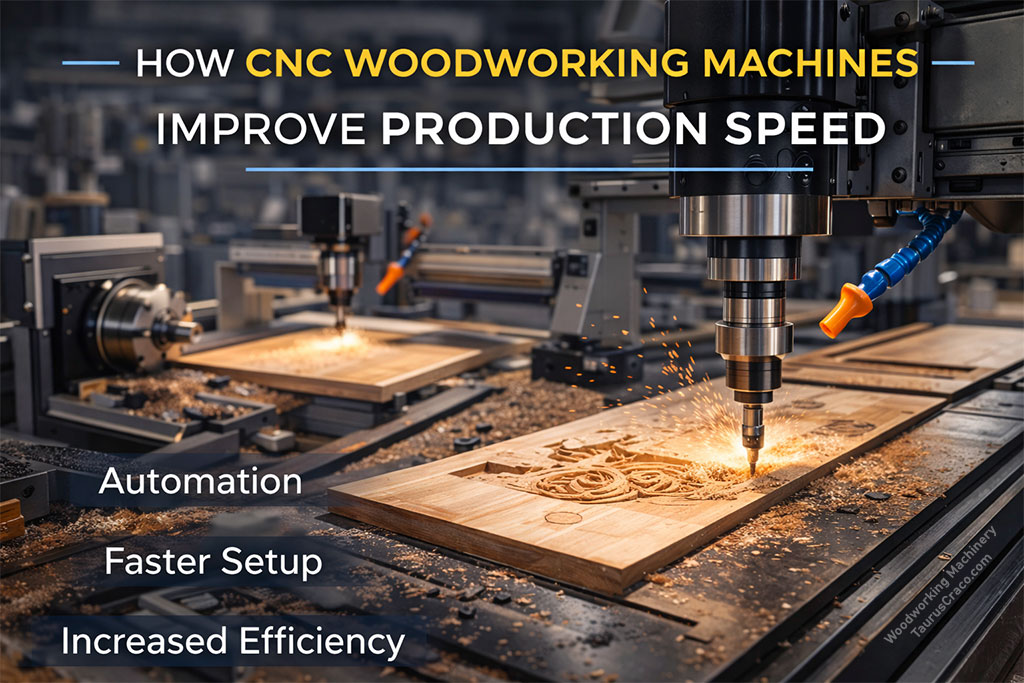
In today’s competitive woodworking industry, speed and efficiency are more important than ever. Businesses must produce high-quality products while meeting tight deadlines and controlling costs. This is where CNC woodworking machines play a critical role. Modern CNC machinery has transformed traditional wood working operations, allowing manufacturers to increase production speed, reduce waste, and improve consistency.
Whether you operate a small cabinet shop or a large manufacturing facility, investing in CNC woodworking machinery can significantly improve your productivity and overall workflow.
Automation Reduces Manual Processes
One of the biggest advantages of CNC woodworking machines is automation. Traditional wood working often requires multiple manual steps including measuring, marking, cutting, and finishing. Each step adds time and introduces the possibility of human error.
With a CNC woodworking machine, the entire process is programmed digitally. Once the design is uploaded, the machine performs cutting, drilling, routing, and shaping automatically. This eliminates repetitive manual tasks and dramatically improves production speed.
Automation also allows operators to manage multiple machines simultaneously. Instead of one operator working on one task at a time, shops can run several CNC machines at once, significantly increasing output.
Faster Setup and Changeover
Another major benefit of CNC machines woodworking operations rely on is faster setup time. Traditional woodworking machinery often requires manual adjustments for each new job. Changing tools, repositioning materials, and recalibrating equipment can take valuable time.
Modern CNC woodworking machinery uses digital programming to simplify this process. Operators can switch between projects quickly by loading new programs. Tool changers automatically switch bits during production, reducing downtime and increasing efficiency.
This flexibility makes CNC machinery ideal for both high-volume production and custom work. Shops can quickly shift between projects without sacrificing speed or quality.
Increased Cutting Speed and Efficiency
The best CNC woodworking machines are designed to operate at high speeds while maintaining precision. Advanced spindles, servo motors, and optimized cutting paths allow CNC machines to process materials much faster than manual methods.
These machines can handle multiple operations in one setup. A single CNC woodworking machine can cut panels, drill holes, route edges, and carve designs without moving the material between different machines.
This streamlined workflow reduces handling time and increases production efficiency. The result is faster turnaround times and improved productivity.
Consistent and Repeatable Production
Consistency is essential in modern wood working. Manual processes often lead to slight variations between parts, which can slow down assembly and require additional adjustments.
CNC woodworking machines eliminate this issue by producing identical parts every time. Once a program is created, the machine repeats the process with precision. This consistency reduces rework and speeds up production.
For cabinet manufacturers, furniture makers, and millwork companies, this repeatability is especially valuable. It ensures parts fit perfectly, reducing assembly time and improving overall efficiency.
Reduced Material Waste
Another way CNC woodworking machinery improves production speed is by reducing material waste. Advanced nesting software allows CNC machines woodworking shops use to optimize material layouts. This ensures maximum use of each sheet of plywood or MDF.
Reducing waste means fewer material changes and less downtime. Shops spend more time producing parts and less time handling materials.
Improved accuracy also reduces mistakes that lead to wasted materials. This helps keep production moving smoothly and efficiently.
Integration with Design Software
Modern CNC machinery integrates seamlessly with CAD and CAM software. Designers can create digital models and send them directly to CNC woodworking machines. This eliminates manual interpretation of drawings and reduces setup time.
Digital workflows also allow faster prototyping and design adjustments. Changes can be made quickly without slowing down production. This flexibility improves speed and responsiveness to customer needs.
Improved Workflow and Shop Efficiency
Using CNC woodworking machines allows shops to streamline their entire production process. Instead of moving materials between multiple manual machines, many operations can be completed on a single CNC woodworking machine.
This reduces material handling, improves shop organization, and shortens production cycles. Efficient workflows help businesses complete more jobs in less time.
Scalability for Growing Businesses
As demand increases, CNC woodworking machinery makes it easier to scale production. Additional CNC machines can be added to increase capacity without significantly increasing labor costs.
This scalability makes CNC machinery an excellent investment for growing wood working businesses. Shops can expand production while maintaining quality and efficiency.
Final Thoughts
Speed, precision, and efficiency are essential in today’s wood working industry. CNC woodworking machines provide the automation and performance needed to meet these demands. From faster setups and increased cutting speed to reduced waste and improved workflow, CNC woodworking machinery helps businesses produce more in less time.
Investing in the best CNC woodworking machines allows wood working operations to stay competitive, improve productivity, and support long-term growth.
Frequently Asked Questions About CNC Woodworking Machines
1. How do CNC woodworking machines improve production speed?
CNC woodworking machines improve production speed by automating cutting, drilling, routing, and shaping processes. Once programmed, the CNC woodworking machine can run continuously with minimal manual intervention, reducing setup time and increasing output.
2. Are CNC woodworking machines suitable for small woodworking shops?
Yes, CNC woodworking machines are ideal for both small and large shops. Smaller businesses benefit from increased efficiency, reduced labor, and improved accuracy, making CNC woodworking machinery a valuable investment for growing operations.
3. What materials can CNC woodworking machines handle?
Most CNC woodworking machines can process a wide range of materials including hardwood, softwood, plywood, MDF, particle board, and composite materials. The versatility of CNC woodworking machinery makes it suitable for many wood working applications.
4. Do CNC woodworking machines reduce material waste?
Yes, CNC woodworking machines use advanced software and optimized cutting paths to reduce material waste. This allows shops to maximize material usage and improve overall efficiency when using CNC woodworking machinery.
5. What are the benefits of investing in the best CNC woodworking machines?
Investing in the best CNC woodworking machines provides faster production, improved precision, consistent results, and reduced labor costs. Modern CNC woodworking machines also improve scalability, allowing businesses to grow and meet increasing demand.