


Essential Woodworking Tooling for CNC Machines
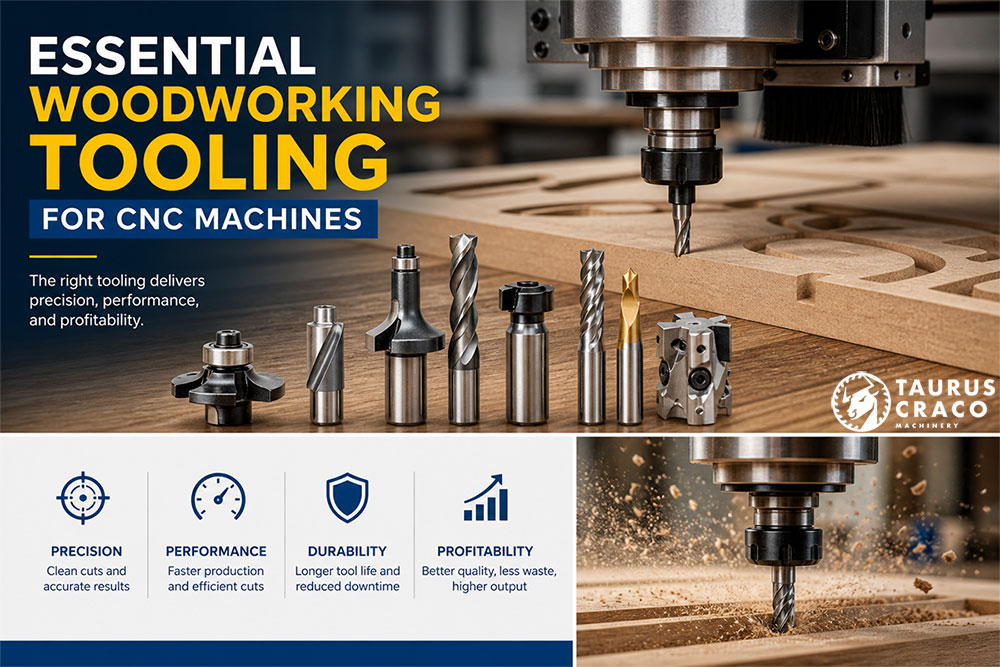
In modern manufacturing, CNC technology has transformed how woodworking shops operate. From cabinetry and furniture to millwork and custom components, CNC systems deliver speed, precision, and repeatability. However, the performance of any CNC setup depends heavily on one critical factor: woodworking tooling.
Even the most advanced woodworking machinery cannot perform at its best without the right tooling. The cutters, bits, drills, and inserts used in CNC processes directly impact cut quality, production speed, material efficiency, and machine longevity. For businesses looking to scale or maintain high-quality output, investing in the right woodworking tooling is just as important as investing in new woodworking machinery or even sourcing used woodworking machinery.
This guide breaks down the essential tooling categories used in CNC applications and how they support efficient, high-quality production.
Why Woodworking Tooling Matters in CNC Operations
CNC machines are designed to follow precise digital instructions, but the physical interaction between the tool and the material determines the final result. Poor tooling leads to rough edges, burn marks, tear-out, and increased wear on machines. High-quality woodworking tooling ensures clean cuts, efficient processing, and consistent output.
The right tooling helps:
- Improve cut precision and surface finish
- Reduce material waste and rework
- Increase production speed
- Extend the life of CNC equipment
- Reduce strain on woodworking machinery equipment
- Support consistent results across large production runs
For shops that plan to buy woodworking machinery, tooling should always be part of the overall investment strategy.
Core Types of Woodworking Tooling for CNC Machines
There are several key categories of woodworking tooling used in CNC applications. Each plays a specific role depending on the material, operation, and desired finish.
1. CNC Router Bits
Router bits are the most commonly used tools in CNC woodworking. They are designed for cutting, shaping, grooving, and profiling materials such as MDF, plywood, hardwood, and laminates.
Common types include:
- Straight bits for general cutting and slotting
- Compression bits for clean top and bottom edges
- Upcut bits for efficient chip removal
- Downcut bits for smooth top surfaces
- V-groove bits for engraving and decorative work
Choosing the right router bit is essential when working with both new woodworking machinery and used woodworking machinery, as it directly affects performance.
2. Drill Bits and Boring Tools
Drilling and boring tools are critical for precise hole placement in cabinetry, furniture, and panel production. These tools are often used for hinges, dowels, and hardware installation.
Key features to look for include:
- Clean entry and exit holes
- Consistent hole diameter
- Long tool life
- Compatibility with CNC drilling cycles
Reliable drilling tools improve efficiency and reduce errors during assembly.
3. Insert Tooling and Replaceable Cutters
Insert tooling uses replaceable cutting edges rather than a solid cutting body. This type of woodworking tooling is widely used in high-volume production environments.
Benefits include:
- Lower long-term tooling costs
- Faster tool changes
- Consistent cutting performance
- Reduced downtime
Insert tooling is especially valuable for shops running continuous production on woodworking machinery equipment.
4. Saw Blades for CNC Systems
Some CNC machines incorporate saw blades for panel processing and cutting operations. These blades must be matched to the material and cutting requirements.
Important considerations include:
- Tooth geometry for clean cuts
- Blade material and durability
- Compatibility with machine speed and feed rates
High-quality saw blades help reduce chipping and improve overall cut quality.
5. Specialty Tooling for Advanced Applications
Many CNC applications require specialized tools for unique tasks. These may include:
- Engraving tools for signage and decorative work
- Diamond tooling for abrasive materials
- Grooving tools for joinery
- Profile cutters for custom shapes
These tools expand the capabilities of woodworking machinery and allow businesses to take on more complex projects.
Matching Tooling to Materials
Different materials require different cutting strategies. The right woodworking tooling ensures optimal performance and prevents damage to both the material and the machine.
Common material considerations:
- MDF and particle board: Requires tooling that minimizes tear-out and dust buildup
- Plywood: Needs clean-cutting tools to prevent splintering
- Hardwood: Requires durable tooling with strong cutting edges
- Laminates: Benefits from compression or specialty bits for clean finishes
When planning to buy woodworking tooling, always match the tooling to the materials you process most often.
Tooling and Machine Performance
Tooling does more than cut material. It directly affects the performance of your woodworking machinery equipment. Poor tooling can increase vibration, reduce cutting efficiency, and put unnecessary strain on machine components.
High-quality tooling helps:
- Maintain consistent feed rates
- Reduce spindle load
- Improve energy efficiency
- Extend machine lifespan
For businesses investing in new woodworking machinery or upgrading used woodworking machinery, proper tooling selection ensures maximum return on investment.
Signs You Need to Upgrade Your Tooling
Even the best woodworking tooling does not last forever. Over time, tools wear down and performance declines. Recognizing the signs of worn tooling helps maintain quality and avoid production issues.
Watch for:
- Burn marks on materials
- Rough or chipped edges
- Increased cutting noise or vibration
- Slower production speeds
- Higher rejection rates
Replacing worn tools at the right time helps maintain efficiency and protects your woodworking machinery.
Buying Woodworking Tooling: What to Look For
When you buy woodworking tooling, quality should always be a top priority. While lower-cost options may seem attractive, they often wear out faster and deliver inconsistent results.
Key factors to consider:
- Material quality and durability
- Precision manufacturing
- Compatibility with your machines
- Availability of replacements and inserts
- Supplier reliability and support
Working with a trusted supplier ensures access to high-quality woodworking tooling that supports your production needs.
Tooling as Part of a Complete System
Tooling should never be viewed in isolation. It is part of a larger system that includes woodworking machinery, software, operators, and workflow processes. The best results come from aligning all these elements together.
A strong setup includes:
- Well-maintained CNC machines
- High-quality tooling matched to applications
- Proper feed rates and cutting strategies
- Regular maintenance and inspection
- Reliable sourcing for tools and replacements
This integrated approach helps businesses get the most value from both their tooling and their woodworking machinery equipment.
Final Thoughts
CNC technology has made woodworking faster, more precise, and more scalable. But the true performance of any CNC system depends on the quality of its woodworking tooling. From router bits and drills to insert tooling and specialty cutters, each tool plays a vital role in production.
For businesses looking to improve efficiency, reduce waste, and maintain high-quality output, investing in the right woodworking tooling is essential. Whether you are working with used woodworking machinery or installing new woodworking machinery, the right tooling ensures your equipment performs at its best.
Choosing high-quality tools, maintaining them properly, and sourcing them from reliable suppliers will help your shop stay competitive and productive in today’s evolving manufacturing landscape.
Frequently Asked Questions About Woodworking Tooling
1. What is woodworking tooling used for in CNC machines?
Woodworking tooling is used in CNC machines for cutting, drilling, shaping, and finishing materials. It directly impacts precision, efficiency, and product quality.
2. How do I choose the right woodworking tooling?
To choose the right woodworking tooling, consider your materials, machine type, production volume, and desired finish quality. Matching tooling to your application is critical.
3. Can poor tooling affect woodworking machinery performance?
Yes, poor woodworking tooling can increase wear on woodworking machinery equipment, reduce efficiency, and lead to lower-quality results.
4. Should I replace woodworking tooling regularly?
Yes, replacing worn woodworking tooling is important to maintain performance, reduce defects, and protect your machinery.
5. Where can I buy woodworking tooling?
You can buy woodworking tooling from specialized suppliers that offer high-quality tools, replacement parts, and support for both new woodworking machinery and used woodworking machinery.